Videos from the Barry Deister Quintet Performance at Michelle’s Piano Event Space on November 22nd, 2025.

Showroom
503-295-1180
Moving & Storage
503-295-9317
Service & Rebuilding
503-819-5053
Outstanding performances and unforgettable moments at the 19th International Fryderyk Chopin Piano Competition!
Once again, our unmistakable Sound of Excellence fills the big stage and inspires audiences of classical music lovers around the world at this year’s Chopin Piano Competition.
With every nuance, every delicate pianissimo, and every powerful passage, it becomes clear why this competition is one of the most renowned events on the international classical music scene.
Congratulations to the talented pianist Tiankun Ma and the outstanding pianist Yulia Nakashima!
Their masterful interpretations, marked by technical brilliance, captured Chopin’s soul in an incomparable way, making the performances unforgettable.
Discover the performances of these exceptional artists, and look forward to a review of a special event by C. Bechstein in honor of the Chopin Competition.
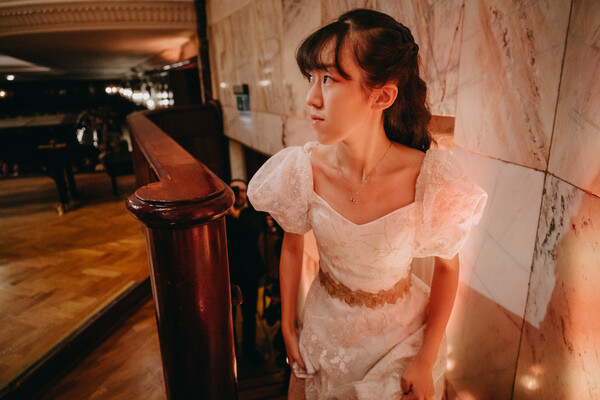
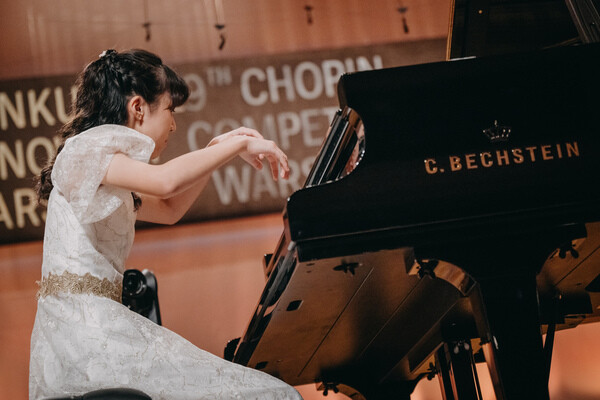
Yulia Nakashima, born on 18 December 2009, has taken various courses and piano tuition at the Moscow Tchaikovsky Conservatory as part of the pre-university programme of the University of Sakuyo in Kurashiki. She now attends the Music High School attached to the Faculty of Music of Tokyo University of the Arts, where she is studying with Mami Hagiwara. She has participated in masterclasses with renowned pianists such as Krzysztof Jabłoński, Mikhail Voskresensky, Philippe Giusiano and Wojciech Świtała. She has won the second prize in the Chopin International Piano Competition in Asia (2024).
Program:
Nocturne in E flat major,Op.55 No.2
Waltz in A flat major, Op. 42
Étude in C major, Op. 10 No. 1
Ballade in F minor, Op. 52
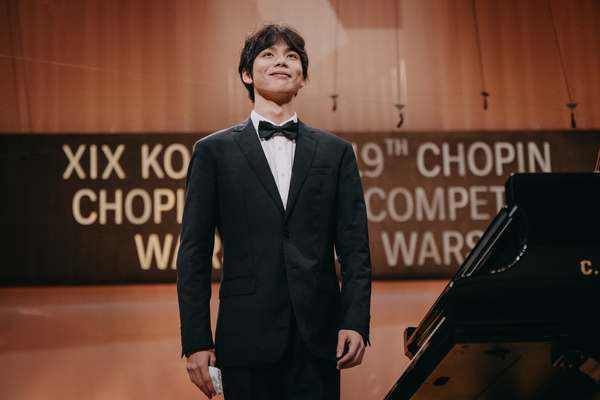
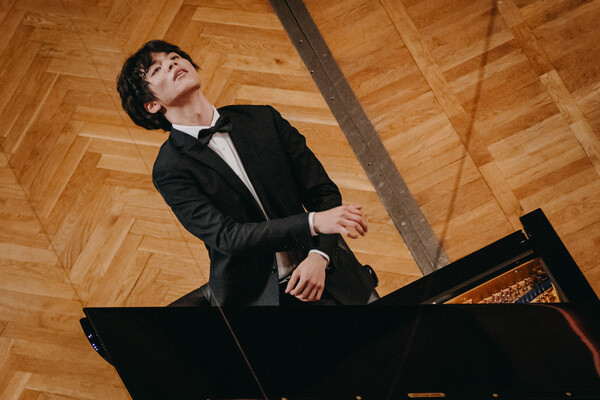
Tiankun Ma He completed his schooling at the Middle School attached to the Central Conservatory of Music in Beijing and is now studying at the Conservatory with Huang Yameng. He has won first prize in the Ukraine International Piano Competition (under-18 category), the Singapore International Piano Competition (junior category) and the 18th Animato International Piano Competition in Paris. His performances have taken him to numerous cities across China and several other countries, including Beijing, Macao, Shenzhen, Guangzhou, Singapore, the US, France and Portugal.
Program:
Nocturne in C minor, Op. 48 No. 1
Étude in G sharp minor, Op.25 No.6
Waltz in E flat major, Op. 18
Ballade in F minor, Op. 52
Watch and listen to the wonderful St. Valentine’s day concert from Anastasia and Andrei Kitaev. The piano concert at Michelle’s Piano in Portland, OR featured music from Anastasia and Andrei Kitaev with a special appearance by Elena Avanesyan. Watch the videos below and join us at our next Portland piano concert.
Organ Music Accompanies COVID-19 Vaccinations at Salisbury Cathedral
As the we continue to move into the beginning of the year, people are slowly queuing up as various COVID-19 vaccinations become available. We’ve recently seen images and videos of seniors or healthcare workers standing in line for hours as they wait with anticipation to get that long-awaited dose of, “a step forward towards normalcy.” In one particular instance, an anxious air of silence does not persist as a group of people stand in wait. Instead, many of those at Salisbury Cathedral in the UK shuffle forward peacefully one after the other as the cathedral’s organist in residence plays Handel; the sounds of triumph and hope echoing out of the 800-year-old pipes and throughout the halls, giving a unique soundtrack to this important experience for so many of these individuals.
David Halls, who has been playing at the cathedral since 1985, told The Times he had been playing Bach’s ‘Jesu, Joy of Man’s Desiring’. He said: “We’ve tried to provide something serene and soothing, and it’s been a privilege to take part. People have been really listening. We’ve even had applause.”
“This is the place where day by day prayer is offered for the healing of the city, for the healing of the nation. To be able to come here today to receive these lifesaving vaccinations, I’m just overjoyed that we can play our part in this,” said Reverand Nicholas Papadopulos, Dean of Salisbury.
The UK has presently vaccinated more than 3.8 million people with either the Pfizer/BioNTech or the Oxford University/AstraZeneca vaccine, and they’re working hard to keep the pace or better yet, accelerate it.
The government’s target is to give the first dose to 15 million people – priority being given to the over-70s, the clinically vulnerable and frontline healthcare workers – by mid-February.
Like Salisbury, Lichfield Cathedral and Blackburn Cathedral are among other places of worship to be used as COVID-19 vaccination centers.
Click here to read more articles by Michelle’s Piano.
COVID-19 vaccinations happening today at @SalisburyCath. The centre is led by local GPs and is well underway. One of the first to get their jab was Louis Godwin, a former WW2 RAF tail gunner who said, "It's so easy. Anybody who can, should get it as soon as they can." @NHSBSWCCG pic.twitter.com/OGvSOmORsO
— Salisbury Hospital (@SalisburyNHS) January 16, 2021

Release of Beethoven Graphic Novel Celebrates the Composer’s 250th Birthday
The anniversary of a symphony’s premiere, or the birth of its composer is often honored through conventional means of a radio special, or a special live performance. However, for the 250th birthday of Ludwig van Beethoven, Z2 Comics in collaboration with Deutsche Grammophone has decided to release a new graphic novel that is as visually stunning as it is informative.
The book itself is a collection of comics inspired by the composer’s life and music, with work by over a dozen illustrators featured. Titled, The Final Symphony: A Beethoven Anthology, the 144-page graphic novel shares the story of his life through various artistic styles, each bringing something different to the table.
“As one of the longest-standing record labels, Deutsche Grammophon has been celebrating Beethoven’s 250th anniversary this year with a number of projects, including the most comprehensive New Complete Edition of Beethoven’s Works ever issued and wonderful new releases with stars like Anne-Sophie Mutter, Daniel Barenboim, Yo-Yo Ma and Rudolf Buchbinder,” said Deutsche Grammophon VP of marketing Kleopatra Sofrioniou in a statement. “We are delighted to be encouraging the dialogue between the visual arts and classical music and hope that this exciting new project will open doors for comic book fans to discover the magic of Beethoven’s music.”
Final Symphony: A Beethoven Anthology is written by Brandon Montclare (Marvel’s Moon Girl & Devil Dinosaur, Image Comics’ Rocket Girl), with David Mack (Cover, Daredevil) providing painted cover artwork, as seen above.
The book is not yet available, but will be able to be purchased via Amazon in the coming weeks.
You can preorder this amazing tribute to Beethoven here: https://www.amazon.com/Final-Symphony-Beethoven-Anthology/dp/1940878462
Meanwhile listeners can enjoy Beethoven The New Complete Edition, the most comprehensive Beethoven anthology ever produced, created in partnership with the Beethoven-Haus Bonn, which includes over 175 hours of music on 123 discs and features over 250 of the greatest Beethoven performers.
Click here to read our other blog posts on current events within the classical music world.
Beethoven Sonata Cycle & Diabelli Variations

Daniel Barenboim is the current general music director of the Berlin State Opera and the Staatskapelle Berlin. In a career spanning several decades, he has received numerous awards and honors for his contribution to Classical music and is regarded throughout the world as one of the Classical world’s most notable and politically active figures. Making his debut as a professional concert pianist at the young age of ten years old in Vienna and Rome, Barenboim found critical acclaim as both a pianist and conductor across Europe.
Following his debut as a conductor with the English Chamber Orchestra in Abbey Road Studios, London, in 1966, Barenboim was invited to conduct by many European and American symphony orchestras. Between 1975 and 1989, he was music director of the Orchestre de Paris, where he conducted much contemporary music.
Barenboim made his opera conducting debut in 1973 with a performance of Mozart’s Don Giovanni at the Edinburgh Festival. He made his debut at Bayreuth in 1981, conducting there regularly until 1999. In 1988, he was appointed artistic and musical director of the Opéra Bastille in Paris.
Now in 2020, Barenboim has once again traded his baton for the 88 keys, by releasing a new collection of recordings centered on the Beethoven Sonata Cycle & Diabelli Variations. Titled 33 Metamorphoses – Complete Piano Sonatas & Diabelli Variations, this album presents Barenboim’s mature vision of these works as a legacy for his contemporaries and future generations.
When asked why he chose to focus on Beethoven and whether or not it was related to the infamous composer’s upcoming 250th birthday, Barenboim notes, “No matter how many times you play them, there are always fresh personal perspectives waiting to be discovered for the performer and for listeners. Beethoven’s sonatas, especially the late works – and the Diabelli Variations too, his last major work for the piano – lift us high above our daily cares and worries to a place where we can begin to see things as they really are, to understand what it truly means to be human.”
During the coronavirus pandemic, and in the extraordinary circumstances that hit humanity so hard this year, Daniel Barenboim returned to Beethoven and reimmersed himself in the scores of his piano sonatas. “Beethoven’s music is always multidimensional: whenever it laughs, it laughs and cries at the same time,” observed Daniel Barenboim. Beethoven’s piano sonatas form one of the most important collection of works in the history of music and represent the most far-reaching overview of the development of his musical style.
We at Michelle’s Piano highly encourage our readers and customers to listen to this new album from Mr. Barenboim, which can be found on both Spotify and YouTube.
You may find more information his website here.
If you liked this article, you can find more of our reviews here.
Please enjoy this sample for the time being:
Tigran Hamasyan Tiny Desk Concert
Tigran Hamasyan is an Armenian pianist who plays mostly original compositions, which are influenced by traditional Armenian folk music. The compositions often utilize unique scales and modalities which give his work a truly interesting style. In addition to Tigran’s folk influence, he is often influenced by American jazz, incorporating dissonant, complex chords into his songs.
Hamasyan has been living in his home country of Armenia since the pandemic began, and he’s taken these unsettling times as an opportunity to catch up on projects that have been remained unfinished; Some for years. For many musicians who previously spent most of their waking hours on the road touring, it’s one of the few benefits of the COVID-19 lockdown- the ability to get old things done and finally move onto new work.
Similar to musicians, the infamous Tiny Desk Concerts have also been forced to adapt to this year. The overall premise of the desk concerts was to showcase a musician at the offices of NPR in a small, intimate setting. That kind of environment isn’t difficult to replicate when it’s turned into the homes of the artists themselves. (Usually their bedroom, or a corner of the house.) Hamasyan jumped at the opportunity to do his own home concert in conjunction with NPR. The first performance in his Tiny Desk (home) concert, “Road Song,” features a melody Hamasyan wrote in 2008, but eventually recorded on his 2013 album, Shadow Theater. Hamasyan will frequently play a solo version of the song live, but had never played it alone in a studio until now. Then follows “Our Film,” from his latest and project, The Call Within. This performance mirrors the intensity and sentimentality of the album version, but here it’s more intimate and fanciful. The last tune, “A Fable,” is the title track of his 2011 solo album, which was inspired by the writings of 13th century Armenian Vardan Aygektsi.
Click here to learn more about the work of Tigran Hamsyan.
Click here to see other Tiny Desk Concerts from NPR.
Click here to read other articles from Michelle’s Piano.
Helping to Heal: Classical Piano Performances for Wildfire Refugees

Photo owned by Statesman Journal
In early September, all of Oregon and California experienced one of the most destructive string of wildfires in the west coast’s history. Over 2,000 fires burned throughout the forests, eventually causing massive evacuations and hazardous air quality for many of us here in Oregon. Two months later, most of the fires have now died out, with Riverside and Lionshead being the few exceptions. Now, as people begin to rebuild and move forward, one local pianist decided to do what he could to help the healing process with a touch of much-needed musical distraction.
Hunter Noack is a classical pianist who began the project titled, In a Landscape: Classical Music in the Wild. As a one-man army with a nine-foot Steinway on the back of his truck, Noack has been performing free outdoor concerts for residents of areas hit hardest by the fires across the Pacific Northwest. He says that each performance is sporadic and there is no concrete schedule. Instead, he’s just been moving from town to town and surprising residents with these impromptu performances.
Along the way, Noack found the Gates Community Church of Christ, which is one of the few buildings that survived the wildfires in one local town. The church has been helping those who who lost their homes to the fire by offering refuge, food and water. Noack performs for this particular congregation most often- in a way, they’re his regular audience.
“Sometimes it’s background music; sometimes they come and sit closer to the piano,” he said. “It’s just been really amazing to hear how meaningful listening music is for people who have lost so much.”
It’s very beautiful to see how the audience react to Noack’s playing. They’ve lost so much, yet are able to sit together, listen, meditate and dwell on the idea that nothing ends forever. That they have the means to continue to learn, listen, and experience together no matter what has transpired. It’s also a sharing experience between the performer and the audience. The act of listening or watching a performer is not purely for sheer entertainment; It’s a period of time in which the outside world dissolves and all that remains is that meditative state of mind in which we can all breathe a little, think clearer, and acknowledge that no matter what happens- beautiful things still exist.
“People have volunteered their stories,” Noack said, recalling one woman’s experience. “The way she was talking about that loss, I felt like she had given me a gift by sharing her story.”
Noack plans to continue the performances until the winter really starts to begin. Before then, his music will continue to help those across the coast find their little moments of peace as they continue to rebuild.
Click here to view video of the performance: https://uw-media.statesmanjournal.com/embed/video/6063582002?placement=snow-embed
Click here to be redirected to our other articles.
Than you for reading, “Helping to Heal: Classical Piano Performances for Wildfire Refugees”
Public Pianos in Portland
While it’s still warm out, we at Michelle’s Piano encourage you to stop by our store and browse our extensive inventory of new and used pianos. At the same time, if you are running errands throughout the Portland Metro area, you may still be able to get a few minutes of practice in anyway! That’s because there are currently ten pianos around Portland put in place for anyone who wants to play. We saw one ourselves over at Pioneer Courthouse Square.
Live music certainly has become a lost luxury this year, but it’s with small projects like this that we’re able to collectively discover the sounds of the piano in even the most unlikely places.
“I have to say after six months of being at home and playing for myself this feels amazing,” said Asher Fulero, a world-class pianist and keyboardist.
You can see more of the pianos in action HERE.
“It’s a connectedness that is really easy and deep, and I can have fun with it or be really serious about it,” he said.
Megan McGeorge is the person who developed Piano. Push. Play. They are the masterminds behind actually finding these old pianos, restoring them, and then placing them throughout the city.
“I truly believe in the power of people seeing the beauty and talent within others, and for a lot of musicians and pianists, it’s hard to have an outlet these days,” McGeorge said.
Each of the ten is given their own unique name. For example, the piano at Pioneer Courthouse Square on Wednesday is called the “Black Love,” decorated by Donovan Edwards.
“It’s a community-making machine, this instrument. That’s what I like to say,” said McGeorge.
Another interesting feature of the project is the inclusion of passports. In each piano’s bench, there is a unique stamp for you to mark your visits across the city. It presents the player with a challenge to find all the other instruments. Sort of like a combination of hide and seek mixed with busking.


When we think of blind musicians in music, we tend to think of geniuses- Ray Charles, Stevie Wonder, Moondog, and also modern pianists like Nobuyuki Tsujii, who recently performed in Liverpool earlier this month. But for those of us who struggle to learn new instruments as able bodied individuals, how does having a sight handicap seem to raise one’s natural ability for sound? When you’re a blind pianist, how do you go about learning such a huge piece? And how can you be expected to pick up on gestures from the conductor? For Tsujii, it’s a process governed by extremely careful listening and, as he described it in 2017, “sensing what’s around me.”
Recently, Professor Adam Ockelford, a musician and visiting research fellow at the Institute of Education, London, discovered various evidence supporting this notion that weakness in one sense can birth genius in others. He and his research team surveyed and visited visually impaired children who had been premature babies, at home and at school. Working with around 40 blind children, as well as surveying parents, teachers and music therapists, the study showed that blind children are 4,000 times more likely to have perfect pitch – a traditional marker of exceptional musical ability – than their fully sighted peers.
The research, which also quizzed parents whose children were fully sighted, found that 48% of blind children demonstrate significant interest in everyday sounds compared to 13% of those with full sight. More than two-thirds of the blind and partially sighted children played at least one instrument, compared with 41% of the sighted group.
Parents of the blind children reported that music was particularly important as a source of comfort, helping them to relax and express their emotions.

When we think of blind musicians, we usually think of Ray.
According to Ockelford, the reason is “the obvious one”. He explains: “In young babies, the brain is very mouldable, synapses grow and connections are made all the time. In blind children, the areas of the brain involved in sight are not being used, but others, including those used for hearing, become much more important. The greater focus on auditory input makes the brain develop in a different way.”
And when someone like Tsuji is learning a new piece, he has a team of helpers break the whole piano part down into recorded chunks which he then learns bit by bit. Given the scarcity of Braille translations of musical scores, doing it by ear is usually the best method.